
Politics
Kpebu: SALL Disenfranchisement Alone Should Have Sealed EC Removal Case

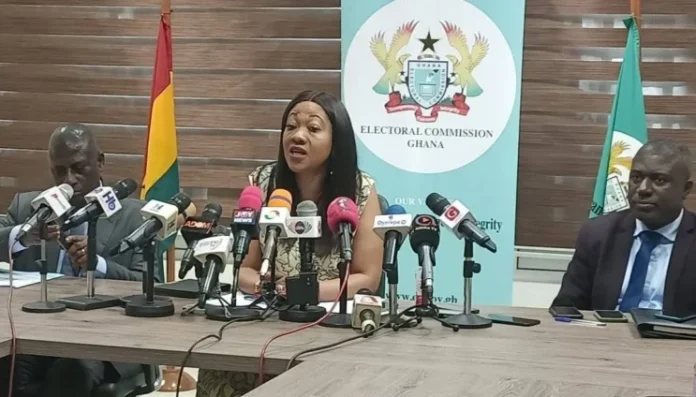
Private legal practitioner Martin Kpebu has questioned how ten petitions seeking the removal of the Electoral Commission (EC) Chairperson and her deputies could fail to establish even a prima facie case before the Chief Justice, arguing that if the disenfranchisement of voters in Santrokofi, Akpafu, Lolobi, and Likpe (SALL) featured among the grounds of complaint, the outcome should never have gone in the EC leadership’s favour.
Speaking on TV3’s KeyPoints on Saturday, February 21, 2026, Kpebu acknowledged that he had not personally reviewed the full content of the petitions before they were submitted to President Mahama. His expressed surprise was therefore conditional, but pointed. “Since the details in those petitions, if they contained the SALL matter, I am surprised that the petitions were thrown out,” he said.
By a letter dated January 26, 2026, Chief Justice Paul Baffoe-Bonnie communicated to President Mahama that none of the petitions had met the constitutional threshold required for removal proceedings to advance. The Presidency made the ruling public on February 18, 2026, in a statement signed by Minister for Government Communications Felix Kwakye Ofosu, confirming that no prima facie case had been established across all seven petitions filed against EC Chairperson Jean Adukwei Mensa and her deputies, Dr Bossman Eric Asare and Samuel Tettey, or across the three petitions targeting Special Prosecutor Kissi Agyebeng.
Among the grounds raised in the petitions was the disenfranchisement of voters in the SALL communities during the 2020 parliamentary elections, an incident that saw thousands of eligible voters denied the right to participate in the parliamentary ballot, a violation one petitioner described as a gross breach of citizens’ constitutional rights. Separate petitions also cited bias on the part of EC Deputy Chairpersons, unnecessary procurement of biometric voter devices ahead of the 2020 elections at significant public cost, and broader concerns about cronyism, incompetence, and abuse of office.
Legal analysts have noted that the constitutional bar for a prima facie finding under Article 146 of the 1992 Constitution is deliberately high. Incompetence, as a ground for removal, refers to a sustained inability to discharge the duties of an office rather than isolated errors or controversial management decisions. That threshold, critics argue, effectively makes it very difficult to remove constitutional officeholders regardless of the seriousness of public concerns about their conduct.
The SALL issue has a long and contested history. The Electoral Commission itself previously published a statement addressing public claims about the SALL Guan constituency’s inability to vote in the 2020 parliamentary election, describing certain reporting on the matter as misinformation. That the issue remains a point of legal and political contention five years after the fact underscores how deeply it has embedded itself in Ghana’s electoral governance discourse.
For Kpebu and others who have argued the case for accountability within the EC, the Chief Justice’s determination closes a formal constitutional avenue, but does not resolve the underlying questions about institutional standards that the SALL saga continues to raise.
Source: www.newsghana.com.gh


TV3’s Godwin Asediba wins the 2025 BBC Komla Dumor Award
Media General Journalist and News Anchor Godwin Asediba has been adjudged winner of the 2025 BBC News Komla Dumor Award....


Government imposes GHC10,000 daily fine on DSTV for failure to submit pricing data
The Ministry of Communication, Digital Technology, and Innovations has impose a statutory fine of GHC10,000 per day on MultiChoice Ghana...


President Mahama to walk the runway at Ghana Fashion Week in July
In a bold and exciting announcement, President John Dramani Mahama revealed that he will make a special appearance on the...


Chez Amis gifts herself Rolls Royce Cullinan on birthday
Renowned Accra-based restaurateur Chez Amis has marked her birthday in grand style by gifting herself a brand-new Rolls Royce Cullinan,...


Akosua Ago Aboagye joins Sompa FM as Accra branch radio manager
Seasoned broadcaster Akosua Ago Aboagye has joined Sompa FM as the Radio Manager for its Accra branch. She made the...


Mahama unveils ‘Black Star Experience’ to boost tourism and culture
President John Dramani Mahama has announced the launch of ‘The Black Star Experience’ as part of his administration’s vision to...
-

 Showbiz4 days ago
Wanlov reveals how he used cutlasses to evade school authorities
-

 Politics4 days ago
Afenyo-Markin Takes NPP’s Political Philosophy to UCC Students
-

 Showbiz4 days ago
He treats us like children
-

 Showbiz6 days ago
I questioned God in my desperation for a child – Diana Hamilton opens up about faith
-

 Showbiz4 days ago
Man pleads with policewomen to be kind after kids traumatized by past incident
-
Politics4 days ago
Afenyo-Markin Tells UCC Students Mahama’s Flagship Plans Remain Unfulfilled
-

 Politics2 weeks ago
Omane Acheampong Criticizes Government’s Cocoa Sector Price Reduction
-

 Showbiz2 days ago
Go and show us where he was buried