
Showbiz
Why is Africa called backward? Leila Djansi quizzes

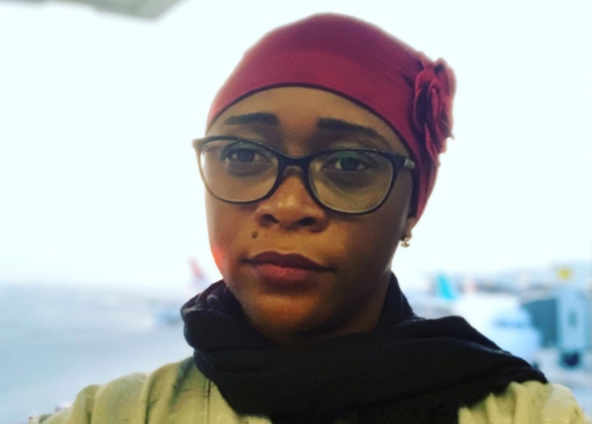
Filmmaker Leila Djansi says she is developing a cinematic universe rooted in African mythology, with a particular focus on the Nigerian concept of the ogbanje.
“I am exploring African mythology as a cinematic universe, focusing on the Nigerian concept of the ogbanje, only to learn that a similar idea appears in European folklore through the changeling myth,” she said. “But they always push the ‘Africa is backward’ narrative.”
Djansi explained that in European folklore, especially in Celtic traditions, there are stories of fairies stealing a human child and replacing it with one of their own.
“The substitute child often appears sickly, strange, or unusually intelligent,” she noted.
She drew parallels with Igbo interpretations of the ogbanje, a spirit child believed to be responsible for repeated child deaths within a family.
“The ogbanje framework was used in Igbo culture to interpret the recurring death of children, which we now understand in some cases as sickle cell disease,” she said.
“Similarly, in Celtic regions, the changeling myth was sometimes invoked to explain children who appeared developmentally different.”
Djansi also pointed to subtle echoes of the substitution theme in modern films.
“You see traces of it in stories like Changeling with Angelina Jolie and Snow White and the Huntsman, where the idea of replacement or stolen youth appears in different forms,” she said.
She believes there is room for African storytellers to revisit these narratives. “It would be powerful to see African storytellers reimagining these myths in modern contexts,” she stated.


TV3’s Godwin Asediba wins the 2025 BBC Komla Dumor Award
Media General Journalist and News Anchor Godwin Asediba has been adjudged winner of the 2025 BBC News Komla Dumor Award....


Government imposes GHC10,000 daily fine on DSTV for failure to submit pricing data
The Ministry of Communication, Digital Technology, and Innovations has impose a statutory fine of GHC10,000 per day on MultiChoice Ghana...


President Mahama to walk the runway at Ghana Fashion Week in July
In a bold and exciting announcement, President John Dramani Mahama revealed that he will make a special appearance on the...


Chez Amis gifts herself Rolls Royce Cullinan on birthday
Renowned Accra-based restaurateur Chez Amis has marked her birthday in grand style by gifting herself a brand-new Rolls Royce Cullinan,...


Akosua Ago Aboagye joins Sompa FM as Accra branch radio manager
Seasoned broadcaster Akosua Ago Aboagye has joined Sompa FM as the Radio Manager for its Accra branch. She made the...


Mahama unveils ‘Black Star Experience’ to boost tourism and culture
President John Dramani Mahama has announced the launch of ‘The Black Star Experience’ as part of his administration’s vision to...
-

 Showbiz6 days ago
Wanlov reveals how he used cutlasses to evade school authorities
-

 Politics7 days ago
Afenyo-Markin Tells UCC Students Mahama’s Flagship Plans Remain Unfulfilled
-

 Politics2 weeks ago
Omane Acheampong Criticizes Government’s Cocoa Sector Price Reduction
-

 Politics1 week ago
Kpebu: SALL Disenfranchisement Alone Should Have Sealed EC Removal Case
-
Politics7 days ago
Afenyo-Markin Takes NPP’s Political Philosophy to UCC Students
-

 Showbiz7 days ago
He treats us like children
-

 Showbiz1 week ago
I questioned God in my desperation for a child – Diana Hamilton opens up about faith
-

 Showbiz7 days ago
Man pleads with policewomen to be kind after kids traumatized by past incident