
Politics
Afenyo-Markin: GRA Pressure on Businesses Unsustainable, Agriculture Left Behind

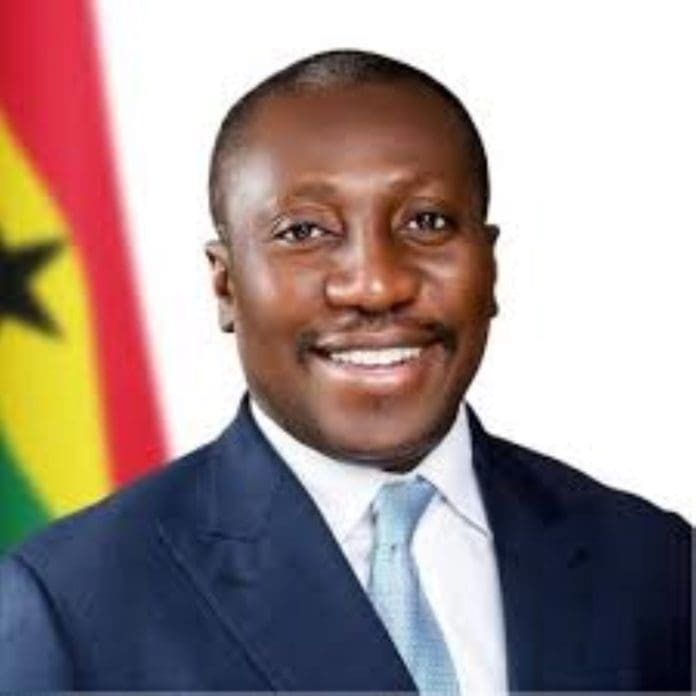
Minority Leader Alexander Afenyo-Markin has delivered a two-front broadside against the government’s post-SONA economic record, arguing that an aggressive Ghana Revenue Authority (GRA) tax enforcement drive is undermining private sector survival, while a perceived fixation on the Ghana Gold Board has come at the direct expense of agriculture and industrial policy.
Speaking on JoyNews’ Newsfile on Saturday, February 28, the day after President John Dramani Mahama delivered the 2026 State of the Nation Address, the Effutu MP said the government had failed to announce a single tangible incentive for businesses in its first year in office, while simultaneously ramping up enforcement activity that is placing small and medium enterprises under severe pressure.
“I challenge anyone to mention a single incentive for the private sector since they came into office. Rather, GRA is always on their neck,” he said.
Afenyo-Markin did not limit himself to rhetoric. He disclosed that his own law firm had recently been subjected to a tax audit, which he described as illustrative of a broader pattern of enforcement targeting compliant businesses rather than expanding the tax base. He warned that the approach is self-defeating. “The problem is not collecting taxes. The problem is how you do it, and whether you are helping businesses to grow so they can pay more in the long term,” he said.
The GRA’s Domestic Tax Revenue Division collected GH¢130.2 billion in 2025, a 20.3 per cent increase over 2024. The authority has set a GH¢162.59 billion target for 2026, representing a further 21 per cent rise, and has announced plans to decentralise audit operations and intensify risk-based interventions across taxpayer categories. In response to broader business concerns, the government abolished the COVID-19 Health Recovery Levy and reduced the effective value-added tax (VAT) rate to 20 per cent as part of the 2026 budget. Officials say these measures are intended to ease operating costs and improve the business climate, but Afenyo-Markin insisted they fall short of what entrepreneurs need to invest and expand.
On agriculture, the Minority Leader challenged the government’s stated commitment to food production, arguing that despite allocating GH¢2.2 billion to the Ministry of Food and Agriculture in the 2026 budget, the impact remains invisible to farmers and agribusinesses on the ground. He said the administration’s true priorities are reflected in its attention, not its budget lines. “If government is that serious, there would have been sufficient investment in agriculture, but they are fixated on the gold board thing, abandoning other areas of the economy,” he said.
He renewed his criticism of the scrapping of the One District One Factory (1D1F) initiative, which Trade Minister Elizabeth Ofosu-Adjare announced in July 2025 had been discontinued in favour of agro-processing parks under the 24-hour economy policy. Afenyo-Markin argued that no credible replacement framework has materialised. “More than a year later, no clear alternative framework has been presented,” he said, calling on the Trade Ministry to publish a concrete strategy for private sector engagement in agriculture.
Source: www.newsghana.com.gh


TV3’s Godwin Asediba wins the 2025 BBC Komla Dumor Award
Media General Journalist and News Anchor Godwin Asediba has been adjudged winner of the 2025 BBC News Komla Dumor Award....


Government imposes GHC10,000 daily fine on DSTV for failure to submit pricing data
The Ministry of Communication, Digital Technology, and Innovations has impose a statutory fine of GHC10,000 per day on MultiChoice Ghana...


President Mahama to walk the runway at Ghana Fashion Week in July
In a bold and exciting announcement, President John Dramani Mahama revealed that he will make a special appearance on the...


Chez Amis gifts herself Rolls Royce Cullinan on birthday
Renowned Accra-based restaurateur Chez Amis has marked her birthday in grand style by gifting herself a brand-new Rolls Royce Cullinan,...


Akosua Ago Aboagye joins Sompa FM as Accra branch radio manager
Seasoned broadcaster Akosua Ago Aboagye has joined Sompa FM as the Radio Manager for its Accra branch. She made the...


Mahama unveils ‘Black Star Experience’ to boost tourism and culture
President John Dramani Mahama has announced the launch of ‘The Black Star Experience’ as part of his administration’s vision to...
-

 Showbiz4 days ago
Wanlov reveals how he used cutlasses to evade school authorities
-

 Politics5 days ago
Afenyo-Markin Takes NPP’s Political Philosophy to UCC Students
-

 Showbiz5 days ago
He treats us like children
-

 Showbiz7 days ago
I questioned God in my desperation for a child – Diana Hamilton opens up about faith
-

 Showbiz5 days ago
Man pleads with policewomen to be kind after kids traumatized by past incident
-
Politics5 days ago
Afenyo-Markin Tells UCC Students Mahama’s Flagship Plans Remain Unfulfilled
-

 Politics2 weeks ago
Omane Acheampong Criticizes Government’s Cocoa Sector Price Reduction
-

 Politics1 week ago
Kpebu: SALL Disenfranchisement Alone Should Have Sealed EC Removal Case