
Politics
Afenyo-Markin Warns Security Bill Hands Coordinator Unchecked Power

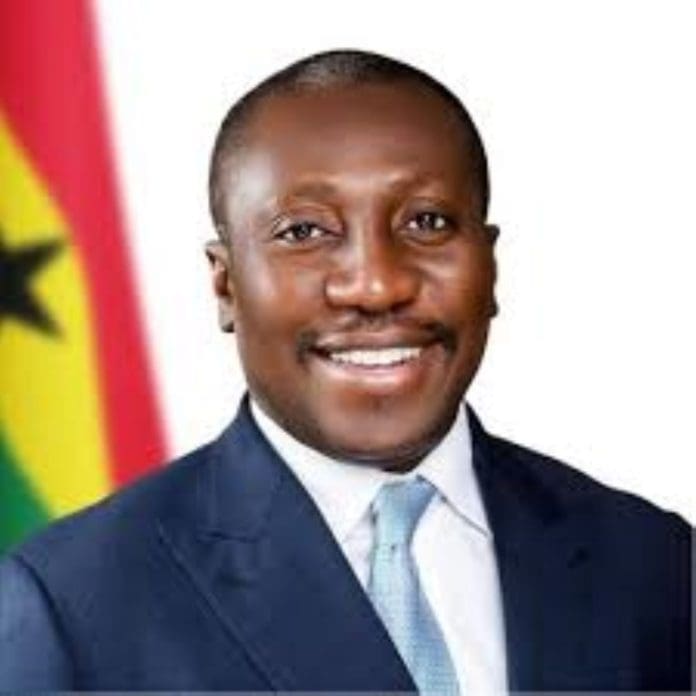
Minority Leader Alexander Afenyo-Markin has thrown down a firm challenge to the government over its proposed Security and Intelligence Agencies Bill, 2025, telling Parliament the legislation hands the National Security Coordinator sweeping authority with no credible mechanism to check it.
Speaking during debate in the House on Thursday, February 19, Afenyo-Markin questioned the very premise of the reforms. He argued that the memorandum accompanying the Bill offers no evidence that the existing legal framework, the Security and Intelligence Agencies Act, 2020, commonly referred to as Act 1030, has broken down or failed Ghanaians in any measurable way.
“The memorandum before us does not provide any empirical evidence to suggest that Act 1030 has failed. It appears that this Bill is more founded on partisan political interest than a national security interest for good governance,” he stated.
His sharpest objection centred on the powers being assigned to the National Security Coordinator under the proposed law. The Minority Leader warned that concentrating executive authority in a single office, without clearly defined limits, creates a dangerous accountability gap.
“So much power is being given to the coordinator, it is not clear how his powers are going to be fettered,” he said. “If you give such powers to the coordinator and you do not provide for a clear path of responsibility, accountability and oversight, it becomes problematic.”
The concerns go beyond one office. The wider Minority Caucus, in a formal statement issued on Wednesday, February 18, described the Bill as deeply flawed on multiple fronts. The caucus flagged the absence of parliamentary vetting for senior security appointments, troubling surveillance provisions that allow communications interception to be authorised by a senior police officer rather than exclusively through a Superior Court judge, and a lack of explicit whistleblower protections for officers who expose wrongdoing within the agencies.
The caucus also raised alarms about Regional and District Security Councils chaired by political appointees, warning the arrangement could be weaponised to suppress legitimate political activity, particularly during election periods.
Afenyo-Markin called for meaningful dialogue between the Interior Minister and Parliament before the Bill advances further, insisting that the Minority’s objections must be addressed substantively, not bypassed.
Interior Minister Mohammed Mubarak Muntaka, who laid the Bill before the House, defended the reforms as necessary to modernise Ghana’s security architecture, including renaming the National Investigations Bureau (NIB) to the Bureau of National Intelligence (BNI) to resolve longstanding administrative confusion caused by its shared acronym with the National Investment Bank.
The Bill has been referred to the Winnowing Committee as Parliament weighs its next steps.
Source: www.newsghana.com.gh


TV3’s Godwin Asediba wins the 2025 BBC Komla Dumor Award
Media General Journalist and News Anchor Godwin Asediba has been adjudged winner of the 2025 BBC News Komla Dumor Award....


Government imposes GHC10,000 daily fine on DSTV for failure to submit pricing data
The Ministry of Communication, Digital Technology, and Innovations has impose a statutory fine of GHC10,000 per day on MultiChoice Ghana...


President Mahama to walk the runway at Ghana Fashion Week in July
In a bold and exciting announcement, President John Dramani Mahama revealed that he will make a special appearance on the...


Chez Amis gifts herself Rolls Royce Cullinan on birthday
Renowned Accra-based restaurateur Chez Amis has marked her birthday in grand style by gifting herself a brand-new Rolls Royce Cullinan,...


Akosua Ago Aboagye joins Sompa FM as Accra branch radio manager
Seasoned broadcaster Akosua Ago Aboagye has joined Sompa FM as the Radio Manager for its Accra branch. She made the...


Mahama unveils ‘Black Star Experience’ to boost tourism and culture
President John Dramani Mahama has announced the launch of ‘The Black Star Experience’ as part of his administration’s vision to...
-

 Showbiz4 days ago
Wanlov reveals how he used cutlasses to evade school authorities
-

 Politics5 days ago
Afenyo-Markin Takes NPP’s Political Philosophy to UCC Students
-

 Showbiz4 days ago
He treats us like children
-

 Showbiz6 days ago
I questioned God in my desperation for a child – Diana Hamilton opens up about faith
-

 Showbiz4 days ago
Man pleads with policewomen to be kind after kids traumatized by past incident
-
Politics4 days ago
Afenyo-Markin Tells UCC Students Mahama’s Flagship Plans Remain Unfulfilled
-

 Politics2 weeks ago
Omane Acheampong Criticizes Government’s Cocoa Sector Price Reduction
-

 Politics7 days ago
Kpebu: SALL Disenfranchisement Alone Should Have Sealed EC Removal Case