
Politics
Ghana’s NDC Faces Backlash Over Reversal on Forest Mining Policy

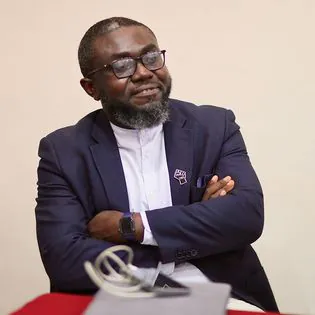
Ghana’s governing National Democratic Congress (NDC) is under fire for abandoning its pledge to repeal a controversial law permitting regulated mining in forest reserves, sparking accusations of environmental betrayal and political hypocrisy.
The reversal on Legislative Instrument (LI) 2462, enacted in 2022 to allow limited mining in protected forests, has drawn sharp criticism from activists and communities grappling with illegal mining’s ecological fallout.
Political activist Osagyefo Oliver Barker-Vormawor has spearheaded demands for transparency, questioning why President John Mahama’s administration, which vowed to scrap LI 2462 during its campaign, now upholds the policy. “The NDC promised repeal but backtracked without explanation. Ghanaians deserve honesty,” Barker-Vormawor stated on social media, reflecting widespread frustration among environmental groups.
LI 2462, formally the Environmental Protection (Mining in Forest Reserves) Regulations, was introduced to formalize small-scale mining in designated zones while curbing illegal operations (galamsey). Critics argue it legitimizes forest destruction, exacerbating water pollution, biodiversity loss, and land degradation. Over 30% of Ghana’s forest cover has vanished since 2000, with illegal mining a key driver, according to Forestry Commission data.
The NDC’s U-turn coincides with rising tensions in mining regions like the Ashanti and Western North, where communities accuse both legal and illegal miners of contaminating water sources. Protests have erupted in towns like Kyebi and Tarkwa, with locals demanding stricter enforcement against galamsey. “Our rivers are toxic, our farms ruined. The government’s silence is complicity,” said Ama Nyamekye, a farmer in the Atiwa Range.
Barker-Vormawor linked the policy shift to broader governance failures, calling it a “national security threat.” Illegal mining fuels organized crime and arms trafficking, with security agencies reporting increased clashes between rival gangs over gold-rich territories.
The government has not clarified its stance, though sources suggest economic pressures influenced the decision. Ghana, Africa’s second-largest gold producer, relies on mining for 16% of GDP and 49% of export earnings. Officials privately argue regulated mining balances revenue needs with environmental safeguards, but critics dismiss this as capitulation to industry interests.
Environmentalists warn the policy undermines global climate commitments. Ghana’s forests, including the biodiverse Atewa Range, host endangered species and act as carbon sinks. “LI 2462 greenlights ecological disaster,” said Daryl Bosu of A Rocha Ghana.
As scrutiny intensifies, the NDC faces a credibility test. Barker-Vormawor’s outcry resonates with a public weary of political reversals, particularly amid a resurgent galamsey crisis. With Mahama yet to address the controversy, the debate spotlights Ghana’s struggle to reconcile economic imperatives with environmental survival.
Source: newsghana.com.gh


TV3’s Godwin Asediba wins the 2025 BBC Komla Dumor Award
Media General Journalist and News Anchor Godwin Asediba has been adjudged winner of the 2025 BBC News Komla Dumor Award....


Government imposes GHC10,000 daily fine on DSTV for failure to submit pricing data
The Ministry of Communication, Digital Technology, and Innovations has impose a statutory fine of GHC10,000 per day on MultiChoice Ghana...


President Mahama to walk the runway at Ghana Fashion Week in July
In a bold and exciting announcement, President John Dramani Mahama revealed that he will make a special appearance on the...


Chez Amis gifts herself Rolls Royce Cullinan on birthday
Renowned Accra-based restaurateur Chez Amis has marked her birthday in grand style by gifting herself a brand-new Rolls Royce Cullinan,...


Akosua Ago Aboagye joins Sompa FM as Accra branch radio manager
Seasoned broadcaster Akosua Ago Aboagye has joined Sompa FM as the Radio Manager for its Accra branch. She made the...


Mahama unveils ‘Black Star Experience’ to boost tourism and culture
President John Dramani Mahama has announced the launch of ‘The Black Star Experience’ as part of his administration’s vision to...
-

 Showbiz5 days ago
Wanlov reveals how he used cutlasses to evade school authorities
-

 Politics5 days ago
Afenyo-Markin Takes NPP’s Political Philosophy to UCC Students
-

 Showbiz5 days ago
He treats us like children
-

 Showbiz7 days ago
I questioned God in my desperation for a child – Diana Hamilton opens up about faith
-

 Showbiz5 days ago
Man pleads with policewomen to be kind after kids traumatized by past incident
-
Politics5 days ago
Afenyo-Markin Tells UCC Students Mahama’s Flagship Plans Remain Unfulfilled
-

 Politics2 weeks ago
Omane Acheampong Criticizes Government’s Cocoa Sector Price Reduction
-

 Politics1 week ago
Kpebu: SALL Disenfranchisement Alone Should Have Sealed EC Removal Case