
Politics
Government Policies Create Jobs Daily, Says Labour Minister Pelpuo

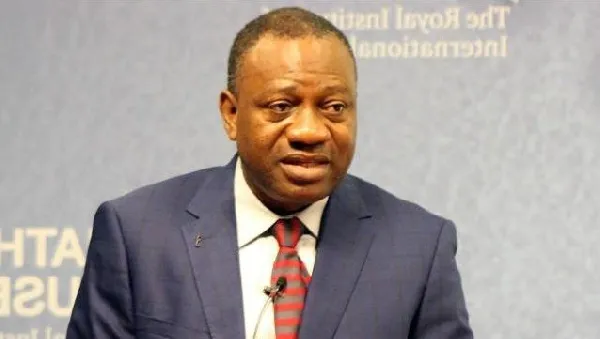
Labour, Jobs and Employment Minister Rashid Pelpuo has stated emphatically that government policies and programs enable jobs to be created every day in Ghana, citing improved economic stability and investor confidence as key drivers of employment growth.
According to him, the government has created an enabling environment for businesses to thrive, inviting investors to willingly commit capital to the country. Speaking in an interview on Accra based GH One Television, Pelpuo said more investors are entering the country than previously because they are certain that the government has fixed the economy for the growth of the private sector.
“Jobs are created in this country every day because of the policies we run. We ensure that people can now go outside the country, buy and come invest, and will not have to go back regretting that when they came, the dollar has risen against the cedi in a manner that has made their profit gone. Once that happens, they keep the jobs, they keep expanding, and once they expand, they absorb more people, and once they absorb more people, jobs are created,” he explained during the television interview.
The minister’s comments represent a confident assessment of the current government’s economic management, particularly regarding currency stability and its impact on foreign direct investment. Currency depreciation has historically been a major concern for investors in Ghana, as sharp fluctuations can erode profit margins and complicate business planning.
Pelpuo emphasized that the government ensures investors will not regret their decision to invest in Ghana due to currency instability that could eliminate their profits. This guarantee of relative exchange rate predictability, he argued, encourages businesses to maintain existing operations, expand their activities, and hire additional workers in the process.
The cedi’s performance against major currencies has been a contentious economic indicator throughout Ghana’s recent history. Under the previous New Patriotic Party (NPP) administration, the currency faced significant depreciation pressures, particularly during periods of economic stress. The current National Democratic Congress (NDC) government, led by President John Dramani Mahama, has made economic stabilization a central pillar of its policy agenda.
However, Pelpuo’s optimistic assessment of job creation stands in contrast to his own previous acknowledgments of Ghana’s unemployment challenges. In an earlier interview with the same television station, the minister blamed Ghana’s lack of jobs on insufficient creativity, describing it as a situation that intensified during the last eight years under former President Nana Addo Dankwa Akufo Addo’s leadership.
In that earlier conversation, Pelpuo acknowledged that unemployment remains a real and persistent problem in Ghana, with an accumulation of jobseekers leaving school and facing the same fears their predecessors experienced about finding employment. He described the challenge as stemming from years of non creative approaches to job creation.
The minister has also assured young Ghanaians not to get frustrated, stating that his ministry is working to create job avenues for the unemployed. During a March 2025 appearance on 3News, he acknowledged that the government, which had been in office for barely three months at that time, needed to first resolve the dizzying nature of the economy before jobs could be adequately created.
The government’s job creation strategy includes multiple initiatives beyond simply encouraging private sector investment. President Mahama has reaffirmed his commitment to implementing the 24 Hour Economy Initiative, describing it as a cornerstone of his Resetting Ghana Agenda and one of the most transformative policies for job creation and productivity.
Already, the Ghana Publishing Company, the Passport Office, and Ghana’s foreign missions have transitioned to 24 hour operations, while Tema and Takoradi ports now run round the clock to improve trade efficiency and reduce congestion. These changes aim to create additional shifts and employment opportunities across various sectors of the economy.
Pelpuo has also emphasized the government’s dedication to reducing youth unemployment by creating job opportunities both locally and internationally. Speaking on Channel One TV in April 2025, he stressed the importance of equipping young Ghanaians to find employment regardless of location, acknowledging that if jobs are not available in Ghana, they can be found elsewhere.
The minister launched the Ghana World Abroad program aimed at facilitating employment for Ghanaian youth overseas while easing local unemployment pressures. He revealed ongoing discussions with foreign governments interested in migrating labor from Ghana, creating conditions for labor transfer to those countries.
During his parliamentary vetting in January 2025, Pelpuo spoke about the ongoing development of a Labour Market Information System, which will provide a comprehensive database of job vacancies and potential candidates. This system would allow the private sector to advertise job openings and connect with prospective employees more efficiently.
The minister also emphasized the importance of supporting the private sector in creating jobs and stimulating economic growth. He suggested that the government offer incentives for private sector investment, such as access to credit and investment opportunities, assuring that the government would encourage the private sector to produce as much as they can.
Ghana’s unemployment situation remains a complex challenge despite the government’s stated optimism. Youth unemployment, in particular, has been persistently high, with many graduates struggling to find formal employment opportunities. The informal sector continues to absorb a significant portion of job seekers, though these positions often lack the benefits and security associated with formal employment.
The government faces the challenge of balancing immediate employment needs with longer term structural reforms needed to transform Ghana’s economy. While initiatives like the 24 hour economy and improved currency stability may contribute to job creation, critics argue that more fundamental changes are needed in education, skills training, and industrial policy.
At the Ghana Career and Migration Fair 2025, Pelpuo urged the youth to cultivate skills that make them competitive globally, tapping into opportunities in digital and green economies. He emphasized that young Ghanaians must adapt to new job sectors and grab available opportunities in an evolving labor market.
The minister stressed that trends like digital transformation and automation are reshaping labor markets, so young people need to be equipped with globally relevant skills. He pointed to avenues like freelancing, remote work, and tech driven entrepreneurship as viable routes for Ghanaian youth to tap into global job markets.
Pelpuo expressed concern about Ghana’s education system, suggesting strongly that improvement is needed to give young people skills not just to work but to be entrepreneurs themselves. He challenged the youth to see themselves as agents of change rather than merely seekers of jobs.
The government’s approach to job creation involves multiple ministries and agencies working in coordination. The Ministry of Trade, Agribusiness and Industry, for instance, has been implementing programs to boost local production and create employment in agriculture and manufacturing sectors. These initiatives align with broader efforts to reduce import dependence and build competitive local industries.
Private sector representatives have generally welcomed government efforts to stabilize the macroeconomic environment, though many continue to cite challenges including high energy costs, inadequate infrastructure, and difficulty accessing affordable financing. These structural constraints limit the pace at which businesses can expand and create new jobs.
The banking sector’s willingness to lend to businesses remains crucial for job creation. High interest rates and stringent collateral requirements often prevent small and medium enterprises (SMEs) from accessing the capital they need to grow. The government has expressed commitment to working with financial institutions to improve credit access for productive sectors.
Infrastructure development also plays a critical role in enabling businesses to operate efficiently and expand employment. Unreliable electricity, poor road networks, and limited access to technology infrastructure all increase operational costs and limit business growth potential. The government’s infrastructure agenda aims to address these constraints over time.
As Ghana approaches the middle of 2025, the actual impact of government policies on daily job creation remains a subject for empirical verification. While the minister’s confidence reflects the administration’s optimistic outlook, concrete employment statistics will ultimately determine whether these policies translate into meaningful improvements in Ghana’s labor market.
Source: www.newsghana.com.gh


TV3’s Godwin Asediba wins the 2025 BBC Komla Dumor Award
Media General Journalist and News Anchor Godwin Asediba has been adjudged winner of the 2025 BBC News Komla Dumor Award....


Government imposes GHC10,000 daily fine on DSTV for failure to submit pricing data
The Ministry of Communication, Digital Technology, and Innovations has impose a statutory fine of GHC10,000 per day on MultiChoice Ghana...


President Mahama to walk the runway at Ghana Fashion Week in July
In a bold and exciting announcement, President John Dramani Mahama revealed that he will make a special appearance on the...


Chez Amis gifts herself Rolls Royce Cullinan on birthday
Renowned Accra-based restaurateur Chez Amis has marked her birthday in grand style by gifting herself a brand-new Rolls Royce Cullinan,...


Akosua Ago Aboagye joins Sompa FM as Accra branch radio manager
Seasoned broadcaster Akosua Ago Aboagye has joined Sompa FM as the Radio Manager for its Accra branch. She made the...


Mahama unveils ‘Black Star Experience’ to boost tourism and culture
President John Dramani Mahama has announced the launch of ‘The Black Star Experience’ as part of his administration’s vision to...
-

 Showbiz4 days ago
Wanlov reveals how he used cutlasses to evade school authorities
-

 Politics7 days ago
Kpebu: SALL Disenfranchisement Alone Should Have Sealed EC Removal Case
-

 Politics5 days ago
Afenyo-Markin Takes NPP’s Political Philosophy to UCC Students
-

 Showbiz4 days ago
He treats us like children
-

 Showbiz6 days ago
I questioned God in my desperation for a child – Diana Hamilton opens up about faith
-

 Showbiz4 days ago
Man pleads with policewomen to be kind after kids traumatized by past incident
-
Politics4 days ago
Afenyo-Markin Tells UCC Students Mahama’s Flagship Plans Remain Unfulfilled
-

 Politics2 weeks ago
Omane Acheampong Criticizes Government’s Cocoa Sector Price Reduction