
Politics
Presidential Aspirant Proposes Decentralization as Solution to Debt Crisis

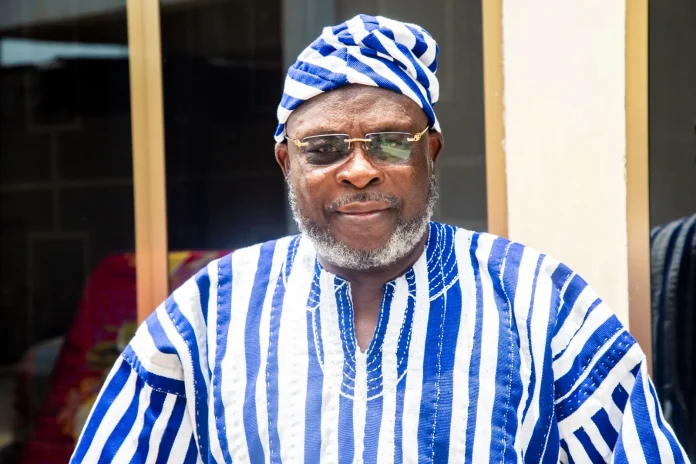
Dr. Tom Asiseh, an independent presidential aspirant, argues that Ghana’s debt problems stem fundamentally from over-centralized governance and that fiscal discipline requires empowering regions to manage their own resources and development.
In an article titled “Beware of Political Smokescreen,” Asiseh contends that Ghana’s centralized administrative structure breeds inefficiency, waste, and dependency that fuels the borrowing cycle. His proposed “reset system” envisions regions functioning as self-driven economic engines that contribute revenue to the central government rather than continuously demanding funding from it.
The core argument is straightforward: when regions control and develop their own natural and human resources, pressure on the central government to finance every project decreases. This, Asiseh claims, would end what he characterizes as reckless spending and foreign borrowing that has trapped Ghana in persistent debt.
Ghana’s fiscal situation provides context for his concerns. The country’s debt-to-GDP ratio exceeded 80% in 2022, contributing to an economic crisis that required International Monetary Fund (IMF) intervention. The current debt stands around 40% of GDP under IMF programme constraints, with substantial portions of the national budget allocated to interest payments rather than development spending.
Asiseh envisions regions generating revenue through economic activities, then remitting a percentage to the central government for national projects. “The reset system would help the central government gain continuous funds into the coffers, a percentage accrued from the proceeds of the utilized resources by the sixteen regions to run the government’s major projects,” he stated.
However, his proposal raises several practical questions that the article doesn’t adequately address. How would revenue sharing percentages be determined? What mechanisms would ensure equitable distribution given that Ghana’s regions have vastly different resource endowments? How would this system handle regions with limited natural resources or economic bases?
That last question represents a significant challenge to Asiseh’s framework. The three northern regions, for example, have fewer natural resources and less developed infrastructure than regions like Western, Ashanti, or Greater Accra. Under a system where regions primarily fund themselves through local resource exploitation, how would poorer regions develop without perpetuating or widening existing disparities?
Critics cited in the article raise exactly this concern, noting the proposal could result in unbalanced development and widen regional disparities. Asiseh’s response to this critique isn’t included, which is a notable gap given it represents perhaps the most fundamental challenge to his decentralization argument.
Ghana already has a decentralization framework through the district assembly system, but implementation has been hampered by inadequate fiscal transfers, limited revenue generation capacity at local levels, and retention of key decision-making authority by central government ministries. Simply declaring greater decentralization doesn’t address why existing decentralization efforts have produced limited results.
Asiseh suggests decentralization would attract diaspora Ghanaians back into regional development initiatives and encourage foreign investors to invest in specific regions they find favorable. That’s plausible for regions with obvious economic advantages, less so for those without natural resources, strategic location, or existing infrastructure that makes investment attractive.
The claim that this approach would eliminate the need for government officials to make “frequent global trips to solicit what he describes as ‘spilled-over dollars’” oversimplifies how international development finance, trade negotiations, and diplomatic relationships work. Even highly decentralized countries maintain active international economic engagement at the national level.
There’s validity to arguments that over-centralization creates inefficiencies and that empowering regions to pursue development strategies suited to their specific circumstances could improve outcomes. Development economists have made similar observations about Ghana’s governance structure. The question is whether Asiseh’s particular model addresses the practical challenges that have constrained previous decentralization efforts.
His proposal also doesn’t address how the transition would work. Would existing national debts be allocated to regions? How would central government functions be restructured? What would happen to national civil servants? How would regional boundaries be managed given that some resources span multiple regions?
The “reset system” framing suggests a fundamental restructuring rather than incremental reform, but the mechanics of implementing such restructuring while maintaining government function and economic stability remain unclear.
Asiseh’s membership in the Ghana Diaspora Movement and his independent presidential candidacy provide context for understanding his perspective. Diaspora communities often observe governance challenges from distance that can generate both valuable insights and proposals that may not account for implementation complexities visible to those managing day-to-day governance.
Whether voters find his decentralization argument compelling will depend partly on whether they view Ghana’s debt problems as primarily governance structure issues or as reflecting other factors like revenue collection challenges, expenditure discipline, terms of trade shocks, or global economic conditions that affect all developing economies regardless of administrative structure.
Finance Minister Cassiel Ato Forson faces the current challenge of managing Ghana’s debt obligations under IMF programme constraints while trying to maintain development spending. Whether deeper decentralization would ease or complicate his ministry’s fiscal management is debatable and would depend heavily on implementation details Asiseh’s article doesn’t provide.
The decentralization debate in Ghana isn’t new, but Asiseh’s emphasis on connecting it specifically to debt reduction rather than just service delivery improvement or democratic participation represents a particular angle on the discussion. Whether that angle generates traction in presidential campaign discourse remains to be seen.
Source: www.newsghana.com.gh


TV3’s Godwin Asediba wins the 2025 BBC Komla Dumor Award
Media General Journalist and News Anchor Godwin Asediba has been adjudged winner of the 2025 BBC News Komla Dumor Award....


Government imposes GHC10,000 daily fine on DSTV for failure to submit pricing data
The Ministry of Communication, Digital Technology, and Innovations has impose a statutory fine of GHC10,000 per day on MultiChoice Ghana...


President Mahama to walk the runway at Ghana Fashion Week in July
In a bold and exciting announcement, President John Dramani Mahama revealed that he will make a special appearance on the...


Chez Amis gifts herself Rolls Royce Cullinan on birthday
Renowned Accra-based restaurateur Chez Amis has marked her birthday in grand style by gifting herself a brand-new Rolls Royce Cullinan,...


Akosua Ago Aboagye joins Sompa FM as Accra branch radio manager
Seasoned broadcaster Akosua Ago Aboagye has joined Sompa FM as the Radio Manager for its Accra branch. She made the...


Mahama unveils ‘Black Star Experience’ to boost tourism and culture
President John Dramani Mahama has announced the launch of ‘The Black Star Experience’ as part of his administration’s vision to...
-

 Showbiz19 hours ago
Volta Region has Ghana’s cleanest water bodies and closest tourist attractions to Accra – Edem
-

 Showbiz2 weeks ago
Wanlov reveals how he used cutlasses to evade school authorities
-

 Politics2 weeks ago
Kpebu: SALL Disenfranchisement Alone Should Have Sealed EC Removal Case
-

 Politics2 weeks ago
Afenyo-Markin Takes NPP’s Political Philosophy to UCC Students
-

 Showbiz1 week ago
How boarding school parties sparked Wanlov’s music journey
-

 Showbiz2 weeks ago
He treats us like children
-

 Showbiz2 weeks ago
I questioned God in my desperation for a child – Diana Hamilton opens up about faith
-

 Showbiz2 weeks ago
Man pleads with policewomen to be kind after kids traumatized by past incident